Most group trips never leave the group chat.
Your friends aren't flaky. Your plan is. Here's why trips stall, a 30-second check for yours, and the exact messages that get a real yes.
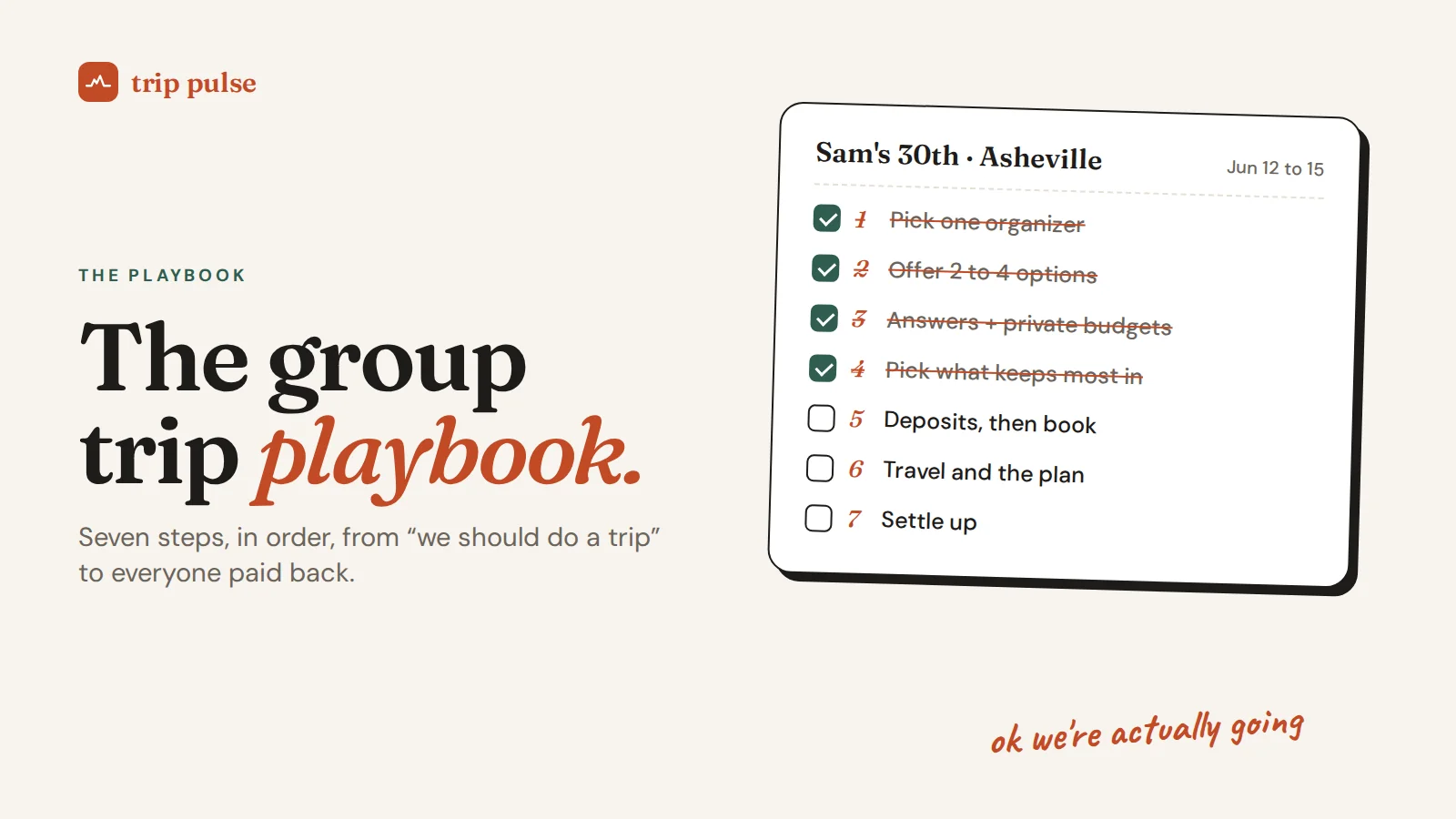
Most group trips die in coordination, not because people don't want to go. To get friends to commit, give them specific options instead of open questions, a deadline, three honest answers to choose from (in, probably or can't make it), a private way to say what they can spend, and a deposit. Commitment follows structure.
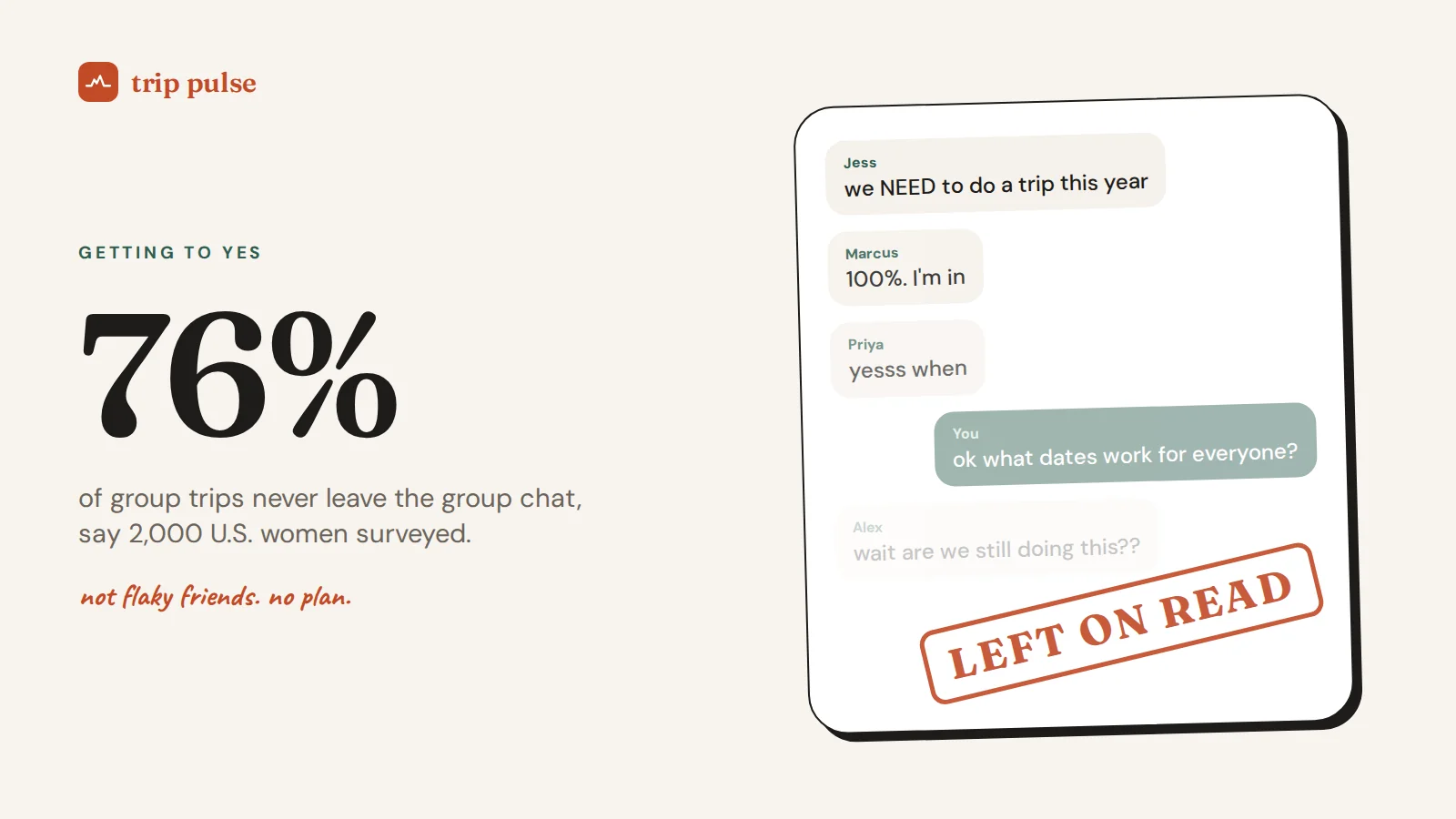
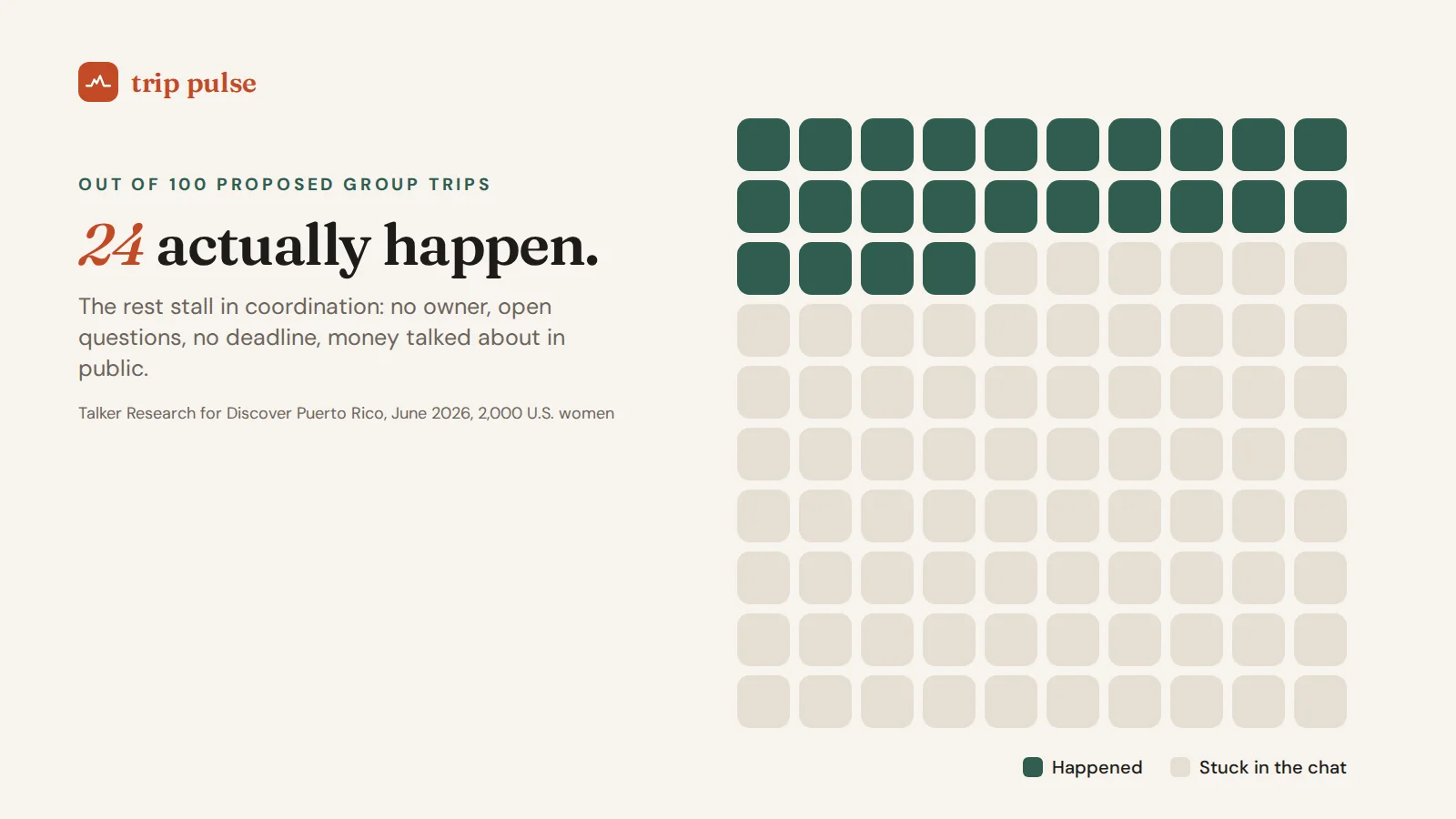
Here's a number that explains your group chat. In a June 2026 Talker Research survey for Discover Puerto Rico of 2,000 U.S. women, respondents said 76% of group trips never make it out of the chat. Only about one in four happen.
The same survey found the trips that did happen took an average of 83 messages and nearly 19 hours of planning over 11 days. That's not a flaky-friends problem. That's a process problem, and process problems have fixes.
Where group trips actually die
Trips rarely get a clear no. They fade. Nearly every fade traces back to one of five moments:
- Nobody owns it. Everyone is "so down" and no one is responsible for the next message. Enthusiasm without an owner is just a mood.
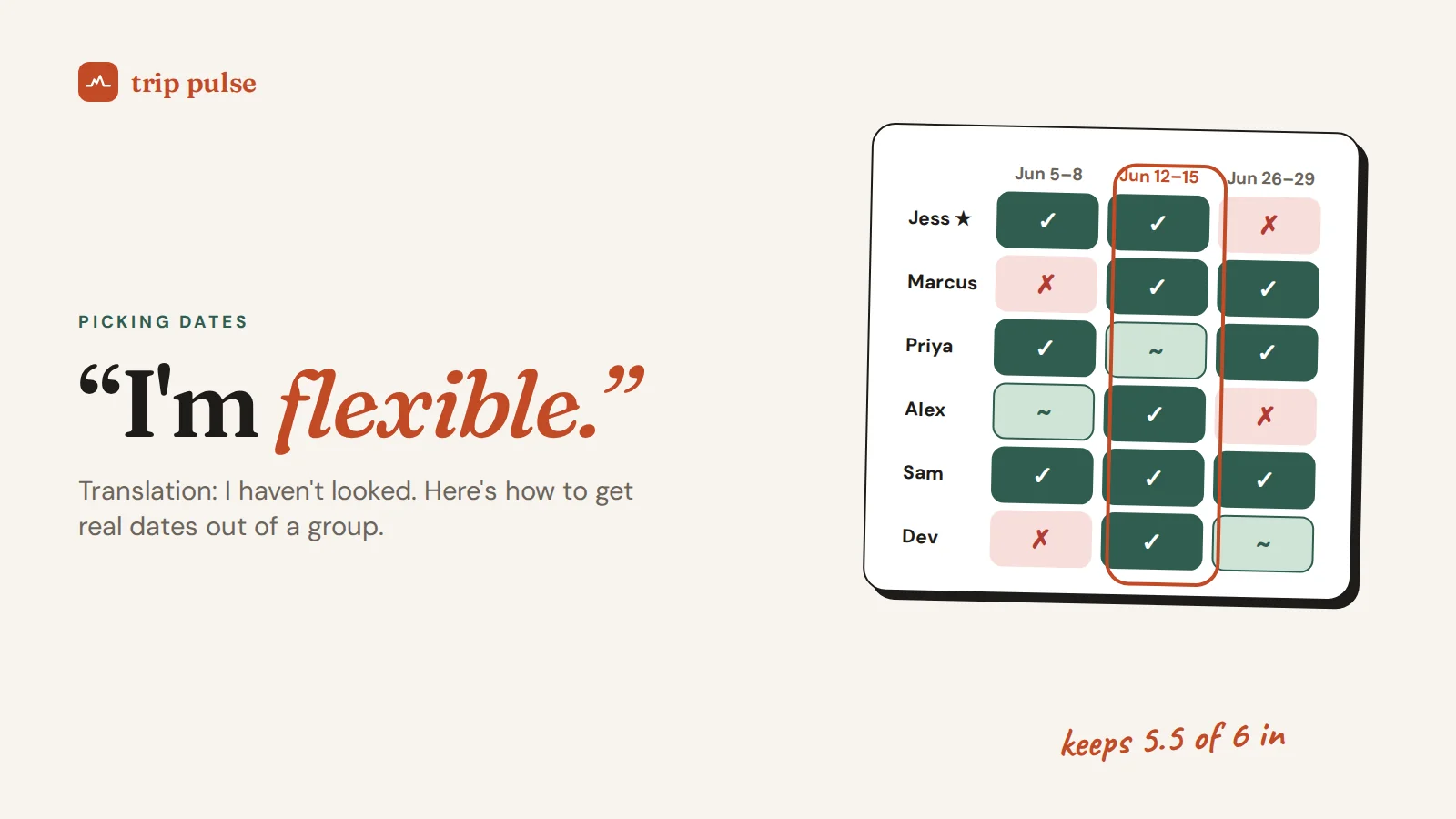
- The question has no edges. "When works?" and "where should we go?" are homework. People put off homework. Specific options are a quiz, and people finish quizzes.
- There's no deadline. The trip moves at the speed of the slowest replier, and every week of waiting makes flights pricier and calendars fuller.
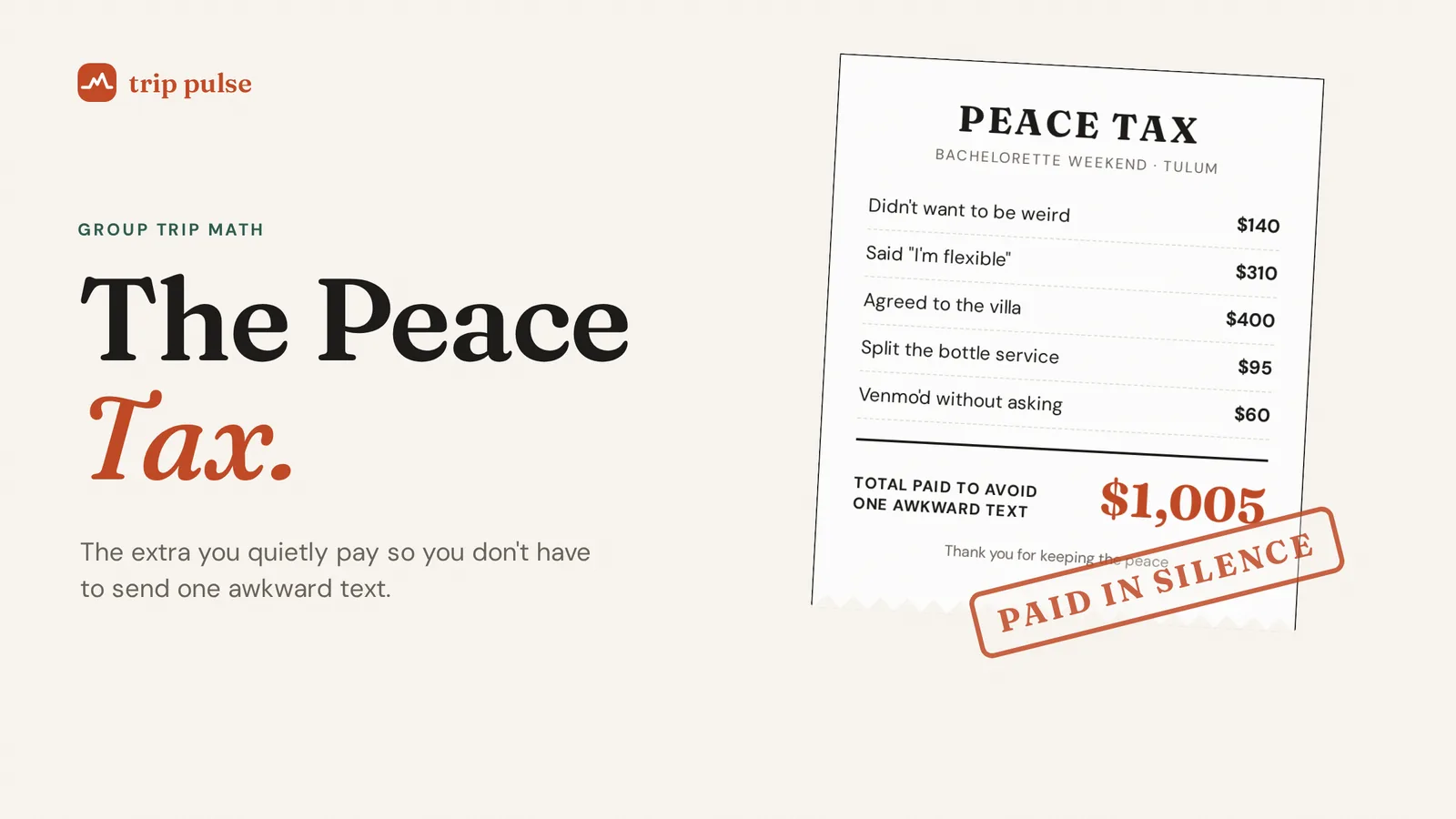
- Money is discussed in public. When the budget conversation happens in the chat, the person who can't afford it doesn't say so. They just stop replying.
- Yes costs nothing. A heart emoji is free. Until someone pays a deposit, every yes is a maybe.
Will your trip actually happen?
Tick what's already true about your trip. You'll get a verdict and the three fixes that matter most for your group.
The interactive check needs JavaScript. The biggest factors: one clear organizer, specific date options, a deadline, honest in or out answers, private budgets, a per-person cost and a deposit.
The messages that get a real yes
Copy these. Change the details. The structure is what does the work.
1. The kickoff
Trip time. I'm organizing, so blame me.

Options: [Jun 12 to 15] or [Jun 26 to 29]. Thinking [Asheville] or [Charleston], about $[700 to 900] each all in.

Tell me by [Friday]: in, probably, or can't make it, which dates work, and (privately, DM me) the most you'd want to spend.
2. The deadline nudge
Answers are due tomorrow. [4] of us have answered. [Names], it takes one minute and I'm booking based on who's answered.
3. The call
It's decided: [Charleston, Jun 26 to 29]. [6] of us are in. About $[850] each.

Deposit of $[150] by [date] locks your spot. Venmo me and I'll book the house.
What about the genuinely flaky friend?
Every group has one. Here's how to handle them without making it a thing:
- Decide without them. The deadline is the deadline. They can still join late if there's room, but the group doesn't wait.
- Give them an easy no. "Can't make it" should be a normal answer, not a confession. People who can say no easily also say yes more honestly.
- Separate "can't afford it" from "don't want to." A lot of flakiness is quiet money stress. In a May 2026 CIT Bank / Harris Poll survey, 61% of group travelers said they'd spent beyond their budget because of social pressure, and 41% had felt pressured into a trip they didn't want to take. Private budgets fix more flakiness than guilt trips do.
- Get the deposit. If they pay, they come.
Questions people actually ask
Why do so many group trips never happen?
Mostly coordination. In a June 2026 Talker Research survey of 2,000 U.S. women, respondents said 76% of group trips never happen; the ones that did took about 83 messages and 19 hours of planning. Open-ended questions, no deadline and public money talk stall trips more than lack of interest does.
How do you get friends to commit to a trip?
Offer specific options, set a deadline about a week out, ask for in, probably or can't make it, collect budgets privately and ask for a deposit once the plan is set.
How long should you give people to answer?
About a week. Long enough to check calendars, short enough that nobody forgets.
Should you plan a trip around the least flexible person?
Only if the trip can't happen without them, like the bride or the birthday person. Otherwise pick the option that keeps the most people in.
How big should a deposit be?
Enough that it would sting to lose: often the first night of lodging or 15 to 25% of each person's share. Make it clear whether it's refundable.
Deadlines and reminders, handled.
Trip Pulse gives everyone one link with the three honest answers, a budget only they see, and an answers-due date. It sends up to two reminders for you, during the day, to anyone you've added an email for, so you're not the one nagging.
you're not the reminder anymoreSurvey data: Talker Research survey for Discover Puerto Rico, June 12 to 18, 2026, 2,000 U.S. women. CIT Bank / Harris Poll survey of 2,067 U.S. adults, May 14 to 18, 2026.
Keep reading